 Snowkiting: what it is, where to do it and the equipment needed for this extreme
  The 7 best kites of 2025
  Surfskate: what it is, how it works and how to choose the ideal surfskate board
  How to choose a Wing Foil board: a guide for beginners and intermediate riders
  The 5 best all-round wing foil wings of 2025
How to prepare physically for the new kitesurfing and wing foil season
During the winter season, when the number of kitesurfing and wing foil rides is drastically reduced, it is a good idea to cultivate a land-based training routine with exercises to improve power, breathing, balance and muscle stretching, to be ready to get back on the water as soon as possible, perhaps even exploring the best kitesurfing destinations in Europe.
Both kitesurfing and wing foil are a great way to keep fit because they involve the muscles of the entire body, develop a great sense of balance, as well as elasticity and endurance. Moreover, as they take place in the midst of nature, they have a great anti-stress effect, allowing you to switch off and recharge your batteries, which also benefits you mentally.
Just like all sports activities, however, they require adequate physical preparation, proportionate to the level of intensity with which they are practised. Moreover, they expose muscles and joints to considerable loads, especially when performing tricks and aerial manoeuvres. To enjoy every outing to the fullest, whether you are a beginner or an experienced rider, it is therefore necessary to take care of your physical fitness with specific training. This also increases the safety factor when we are in the water, as this prevents sprains, cramps and fatigue, especially if you also use appropriate protective accessories such as impact vests and helmets.
So let's see how to prepare physically, both for amateur outings and in view of the competitive calendars - such as the Kitesurfing or Wing Foil Competition Calendar of 2025 - for these 2 disciplines.
Differences in muscular and athletic commitment in the two disciplines
On the subject of physical preparation, a brief distinction must be made between kitesurfing and wing foil, which, although they are sports disciplines that are similar in many respects, in fact require the use of different equipment and consequently present certain differences in terms of energy expenditure, balance and muscular effort. In both, the rider exploits the force of the wind, so the physical exertion and muscular endurance increase in proportion to the weather conditions. Furthermore, they are two predominantly aerobic and endurance sports, thus comparable to cycling, running and long-distance swimming. The muscles most involved in both activities are also the same: the shoulder, back, abdominal and leg muscles.
The real difference is that in kitesurfing, the force of the sail is “discharged” over the whole body via the harness without putting too much strain on the arms and back, while the legs have to bear a great deal of stress.
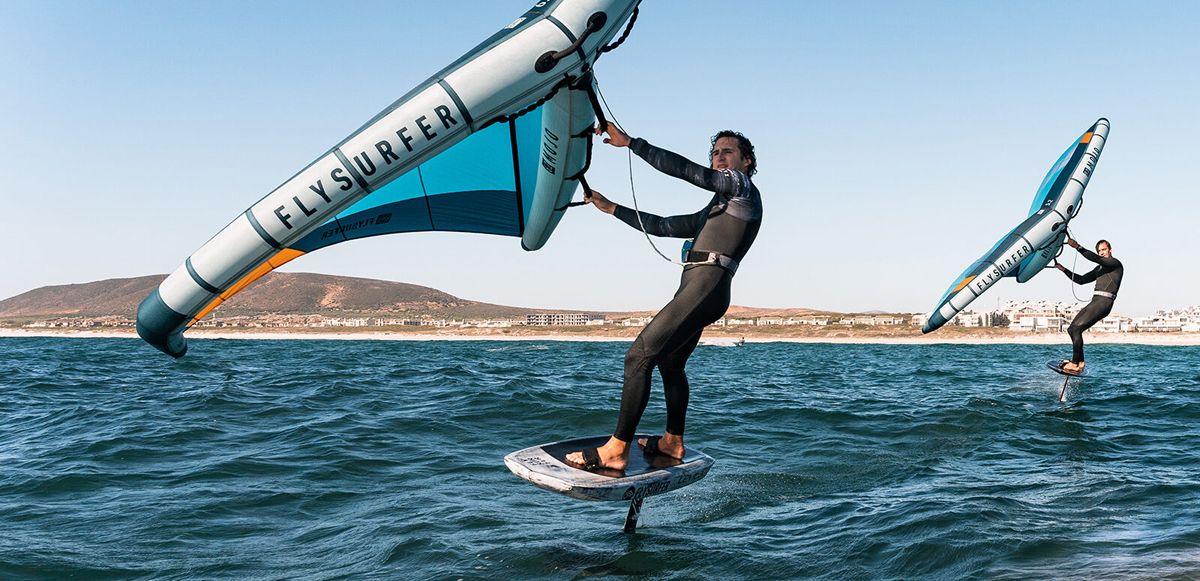
In contrast, in the wing foil the traction generated by the wing is supported solely by the arms, which transfer the force to the board via the trunk and legs.
During foil sailing, the balance work is at a maximum and the muscles are subjected to low to medium anaerobic effort, but explosive power is required to pump the wing and board during the start phase. For these reasons, wing foil is more demanding than kitesurfing on a muscular and aerobic level, more akin to windsurfing and surfing for instance. To better understand the different dynamics, a detailed comparison of these wing sports may be useful.
How to improve “breath” in preparation for kitesurfing or wingsurfing
As aerobic sports, both kitesurfing and wing foil require cardio training to develop “breath” and endurance. Running, swimming and cycling are some of the workouts to be favoured.

Sessions of 30-40 minutes alternating between fast and slow sets, with 3 minutes between sets. The aim is to push the body to the limit, increase the heart rate and burn more calories for a certain period of time, after which the workload is reduced and the body recovers. In this way, the heart and lungs are continuously stressed, but in a broken manner.
Whatever sport you practise, running, swimming or cycling, adapt your pace to your physical condition and be aware of your limits. Regular training will allow you to improve, stay in the water even for several hours and above all avoid injuries when you return to your favourite watersport.
Developing muscular power and endurance
Kitesurf and wing foil are not typical strength sports, but rather endurance sports. There is no doubt, however, that a strengthening of all muscle groups has enormous benefits and is highly recommended. In particular, so-called “resistant” strength, i.e. the body's ability to withstand a given load over a long period of time, should be trained.
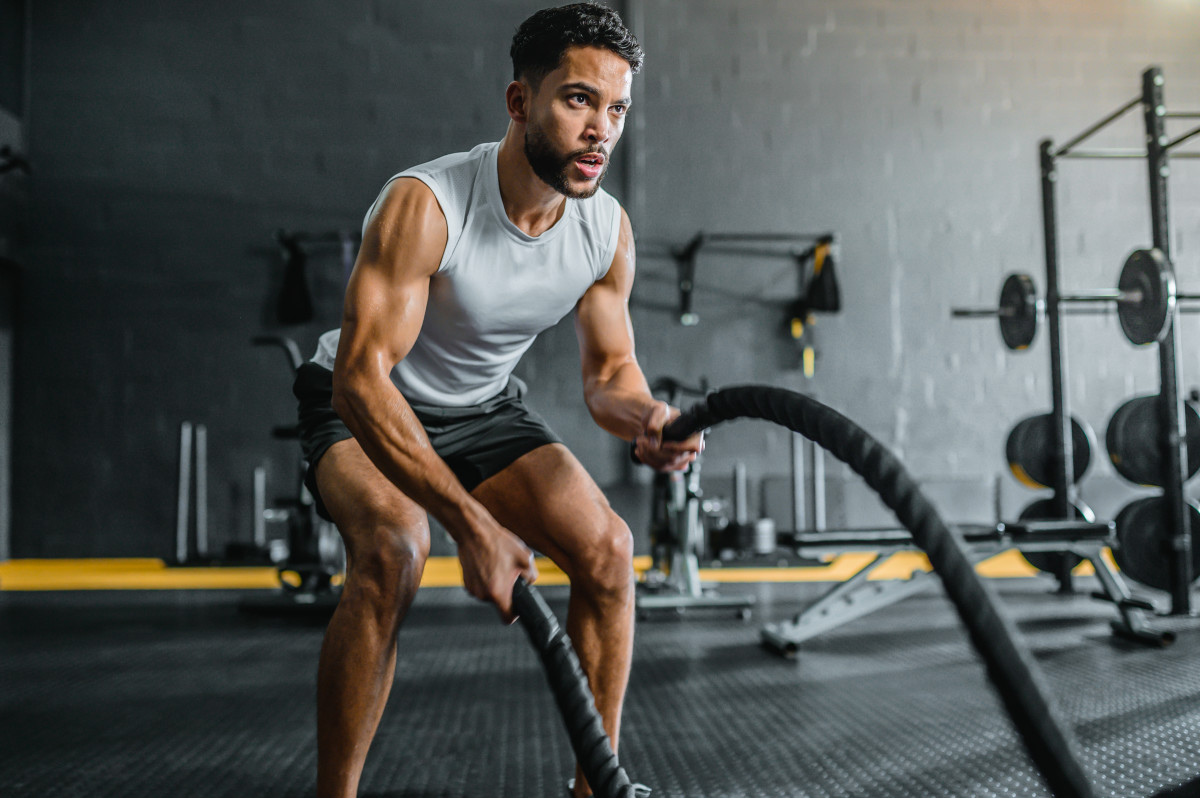
To respond to the stresses of kitesurfing and wing foiling, ideal muscle training should aim to build strength across the full range of joint movement. This approach, referred to as Power-Flex, prepares the body to handle the dynamic loads and extreme positions typical of these sports, much like in gymnastics, where strength is also expressed under conditions of considerable elongation. Working in this way makes it possible to develop a high-performance musculature that is simultaneously strong, flexible and resistant to the prolonged exertion required in the water.
It is therefore good to focus on training with weights, possibly free weights, but also elastic bands and fitballs. The important thing is to work with medium/light loads and a high number of repetitions. Also good are push-ups for the arms, pull-ups at the bar for the back and shoulders, exercises for all the abdominal bands, not forgetting squats and stretches for the leg and lower back muscles.
How to train balance for kitesurf or wing foil practice
Another extremely important factor in the practice of kitesurf and wing foil is balance, i.e. the rider's ability to keep the body aligned, coordinated and balanced, not only in static conditions, but also dynamically, when navigating and performing changes of direction, jumps and manoeuvres. Improving balance also with specific training in view of the next season is absolutely recommended.
One can perform balance exercises either free-body or using some specific equipment, such as balance boards or slack line, which greatly help to develop greater awareness of one's body in space, facilitating movements and increasing the ability to react quickly.
But you can also train with other disciplines, such as Pilates, Tai Chi and Yoga, which work on functional balance, toning the stabilising muscles of the trunk and improving breathing techniques.
Stretching and flexibility, also key factors in watersports
The practice of kitesurf and wing foil subjects the rider's body to widespread and repeated muscular strain, twisting and joint movements. It therefore becomes essential to increase one's elasticity and flexibility with targeted stretching and muscle lengthening exercises.
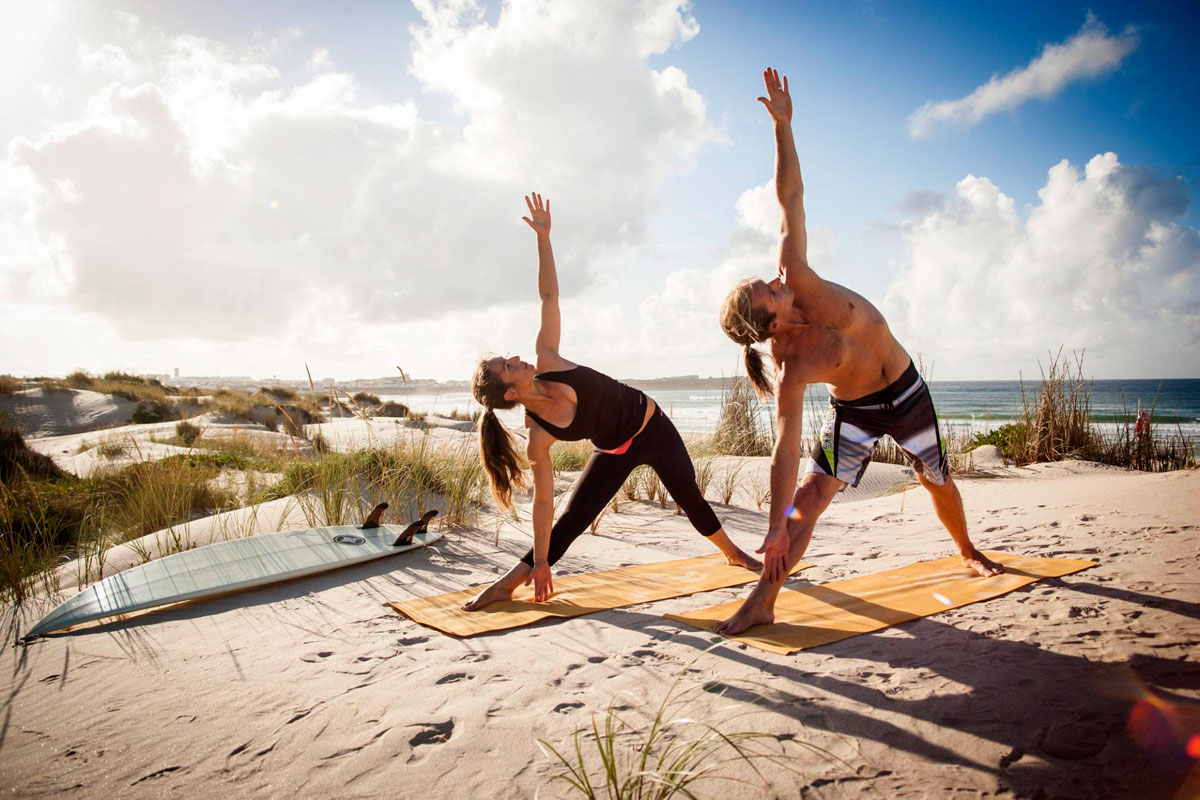
A regular stretching routine before the sports season optimises performance in the water and promotes proper function and efficiency of muscles, tendons and joints. It also helps reduce the risk of injury, thanks to an appropriate wetsuit that keeps the body at the right temperature, and prevents strains and contractures thanks to the increased ability of muscle-tendon structures to adapt to heavy workloads and stresses. It also facilitates recovery, promotes correct posture and contributes to the reduction of muscle stress.
Photo Credit
Photo 1: OKRAFTS
Photo 2: FLYSURFER
Photo 3: PIXIE
Photo 4: ISTOCK
Photo 5: INDIAN FACE
