Snowkiting: what it is, where to do it and the equipment needed for this extreme
  The 7 best kites of 2025
  Surfskate: what it is, how it works and how to choose the ideal surfskate board
  How to choose a Wing Foil board: a guide for beginners and intermediate riders
  The 5 best all-round wing foil wings of 2025
A guide to kitesurfing: what it is and how it works
Kitesurfing, also known as kiteboarding, is a water sport that combines elements of sailing, surfing, wakeboarding and windsurfing. Practitioners use a kite, i.e. a wing-shaped kite, to harness the power of the wind and get towed on a surfboard-like board. Thanks to the power of the wind, kiteboarders can reach high speeds, perform jumps and stunts, and glide over the water in an extremely dynamic and fun way.
The origins of the sport in the Hawaiian Islands
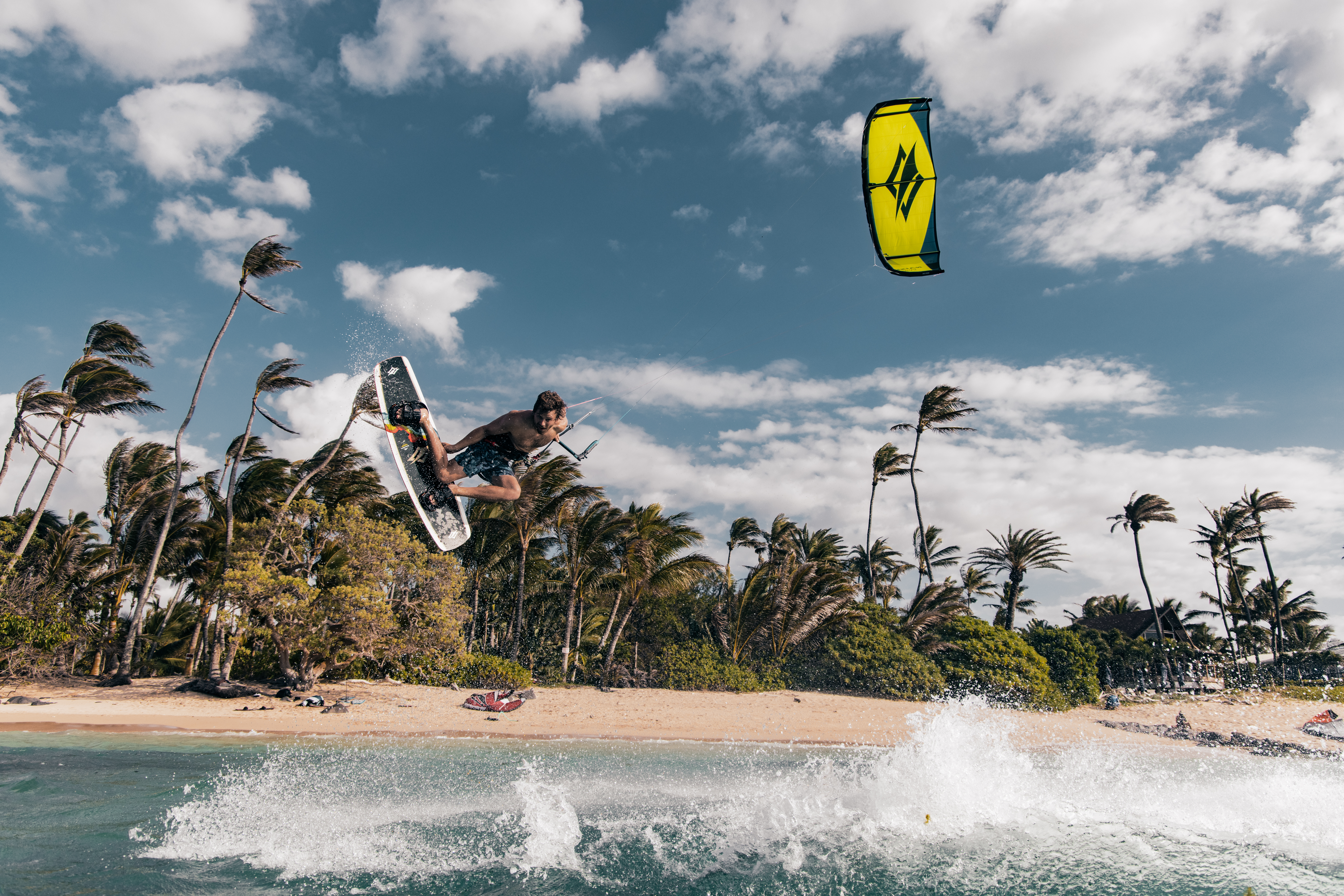
The sport of kitesurfing has fairly recent origins. It was in the 1980s that the concept of a tow kite was applied to board sports, such as skiing and skateboarding, or to wheeled vehicles, such as the buggy, thanks to the research of New Zealander Peter Lynn. In 1982, Frenchman Rolad Le Bail patented the “BirdSail”, a forerunner of the kite, while in the early 1990s, the Corey brothers and Bill Roeseler of Seattle created the “Kiteski”, a large acrobatic kite in the shape of a two-cable “delta”, equipped with a spring-loaded reel bar that allowed it to be recovered and relaunched from the water.
Later, in the mid-1990s, surfboard shaper Jimmy Lewis and one of the pioneers of kitesurfing, Lou Wainman, began experimenting with the first twintip, i.e. bi-directional boards. It was then thanks to the work of the French brothers Bruno and Dominique Legaignoux and their patent-tested “WInd Powered Inflatable Kite Aircraft”, acronym WI.P.I.K.A., in Hawaii, that kitesurfing as we know it today became a true sporting discipline in the late 1990s, safe and accessible to all.
Kitesurfing components and equipment

Like any technical sport, kitesurfing relies on a range of equipment and components that must be chosen carefully according to the characteristics of the rider and his surfing style.
- Kite - The wing-shaped kite is the main source of power in kiteboarding. There are various types of kite, but the most common are “C” or “Delta” shaped or so-called “bow kites”. Each model has specific characteristics in terms of manoeuvrability, power and safety.
- Control Bar - The control or piloting bar is connected to the kite via control lines which are usually four (two for control and two for power). Pulling the bar towards you increases the power of the kite, while pushing it forward reduces the power.
- Lines - The lines connect the control bar to the kite, are made of high-strength materials such as Dyneema and Kevlar and can vary in length, affecting the manoeuvrability and responsiveness of the kite.
- Board - A kiteboarding board is similar to a wakeboard, but generally lighter, with less volume and more flexible. There are bi-directional boards, called “twin-tips”, which allow sailing in both directions without having to change position. But there are also surf-style boards called “surfboards” or even boards equipped with a hydrofoil for surfing on the surface of the water.
- Trapeze or harness - The trapeze is worn around the waist or hips and connects the kite to the rider via a metal hook. This system allows the force of the kite to be transferred from the rider to his or her lower body, easing the strain on the arms.
How does kiteboarding work?
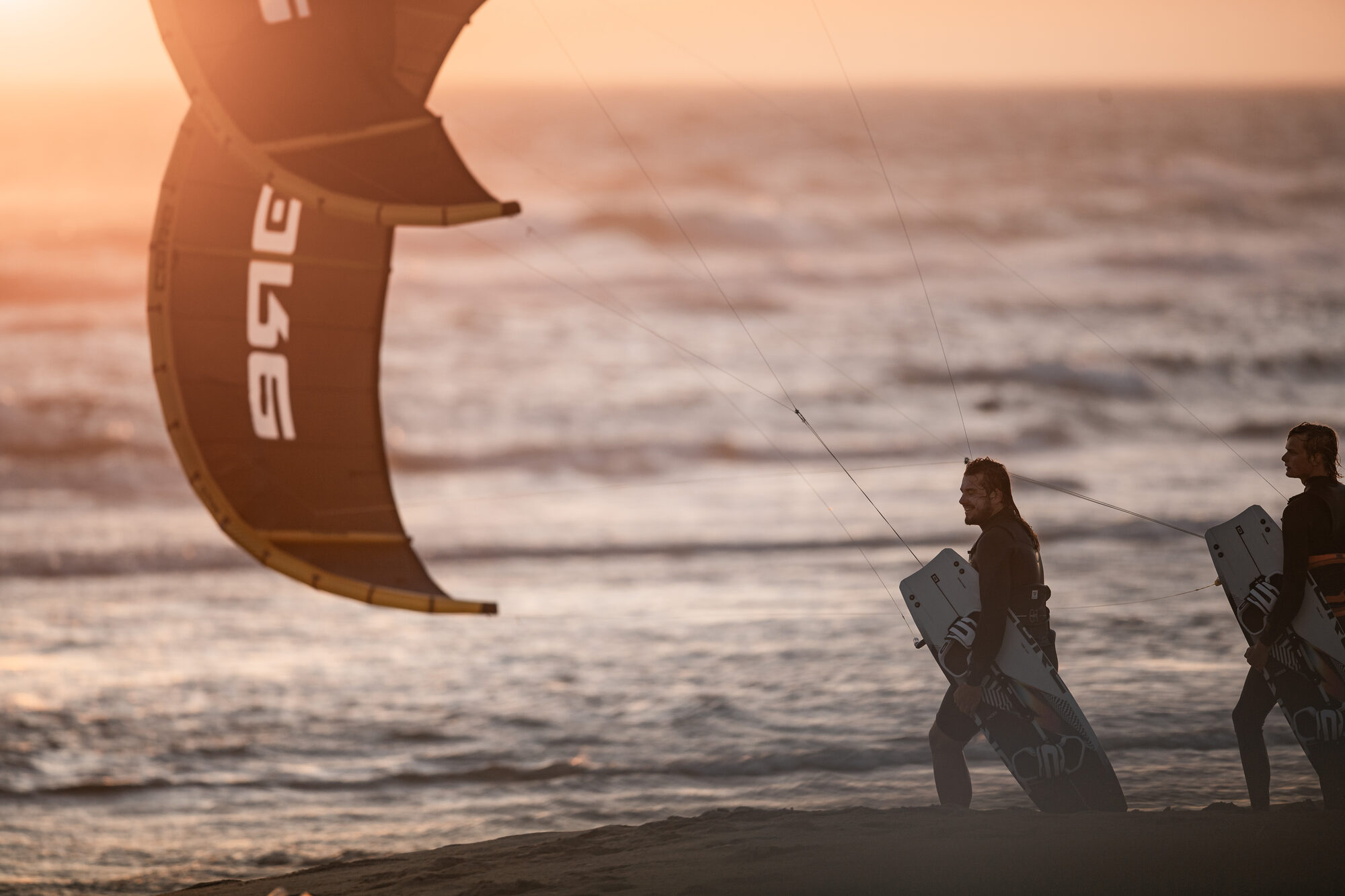
Before starting a kitesurfing session, it is essential to check the equipment and weather conditions. The wind must be adequate, neither too strong nor too weak, and the sailing area must be safe, free of obstacles and other people. Once the kite is assembled and attached to the steering bar, the rider must position himself correctly for take-off. Once taken off, the rider begins to steer the kite to generate power by moving it through the wind window and the board glides over the water while the rider maintains balance and controls the direction with the bar.
In addition to sailing in all gaits, from upwind to downwind, riders can change direction and perform jumps and manoeuvres, known as “tricks”, which consist of acrobatic figures and spins in the air. To conclude a session, the rider reduces the power of the kite by bringing it into the neutral zone and gradually lands it safely.
Freedom and adrenaline, but watch out for safety!
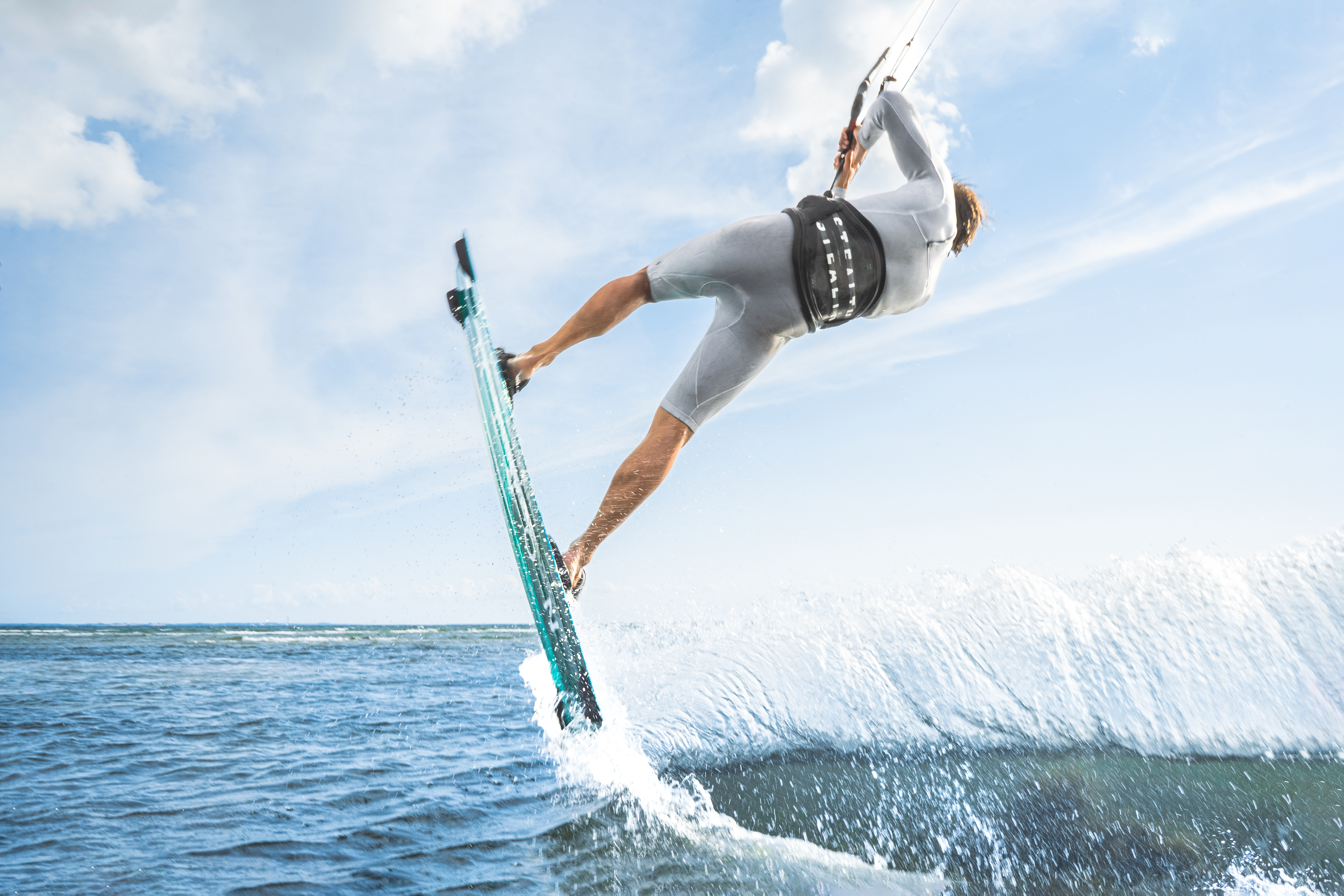
Kitesurfing is an exciting sport, but it can be dangerous if not practised with proper precautions. It is therefore advisable to take a course with certified instructors (FIV, Iko, etc.) to learn basic techniques and safety procedures.
The use of appropriate equipment, such as a life jacket, helmet and safety leash, is also essential to prevent accidents.
Kiteboarding is a sport that offers an extraordinary combination of speed, freedom and adrenaline. With good preparation and respect for safety rules, anyone can learn to kiteboard and enjoy the unique thrills this sport offers.
If you are looking for an adventurous and fun activity, kitesurfing could be the perfect choice for you!
Photo Credit
Photo 1: NAISH
Photo 2: NAISH
Photo 3: CORE
Photo 4: NORTH