Snowkiting: what it is, where to do it and the equipment needed for this extreme
  The 7 best kites of 2025
  Surfskate: what it is, how it works and how to choose the ideal surfskate board
  How to choose a Wing Foil board: a guide for beginners and intermediate riders
  The 5 best all-round wing foil wings of 2025
How to choose a Wing Foil board: a guide for beginners and intermediate riders
Choosing a Wing Foil board is one of the most important decisions for anyone new to the sport. In this guide, we will explore the different models and technical parameters to help you understand which board is best suited to your riding style.
Wing Foil is a young, dynamic and incredibly fun discipline that combines the sense of freedom of windsurfing or kitesurfing with the lightness of foiling. But to truly experience the feeling of “flying over the water”, you need the right board: stable, balanced and consistent with your level of experience.
For a beginner, choosing a board can seem like a maze of sizes, volumes and materials. But with a few key concepts, you can easily find the perfect model to start with and progress safely. One thing is certain: the right board allows you to learn faster, avoid frustration and enjoy your first glides right away.
Wing Foil board volume: the measure of buoyancy

The first parameter to consider, and probably the most important, is the volume of the Wing Foil board, expressed in litres. The volume represents the board's ability to float and support the weight of the rider and their equipment.
How to calculate the volume of your Wing Foil board:
- Beginners: rider's weight + 30/40 litres
- Intermediate: weight + 10 litres
- Advanced: weight – 10/15 litres
For example, if you weigh 70 kg, a 100–110 litre board will be perfect for your first few sessions. A more generous volume will give you greater stability and an easier start, especially in the early stages when you have to coordinate wing management and balance on the board.
You can take a look at models such as the F-one Rocket AIR inflatable foilboard or the RRD Air Beluga Wing Foilboard, both ideal for those taking their first steps in Wing Foil.
Board length: midlength or downwind?
In recent years, Wing Foil boards have evolved considerably, and two categories have emerged based on their characteristics and use: midlength and downwind.
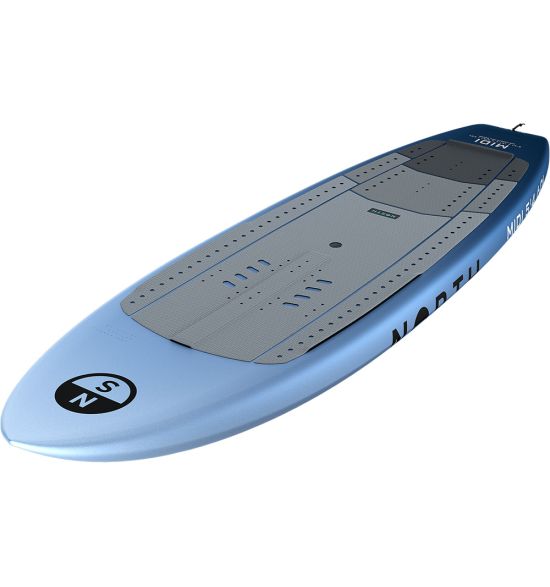
Midlength boards, such as the North Midi Midlength Foil Board, are a perfect compromise between stability and manoeuvrability. They are of average length, generous width and balanced volume. They are very versatile and suitable for those looking for a single board for all conditions, from light winds to moderate waves.
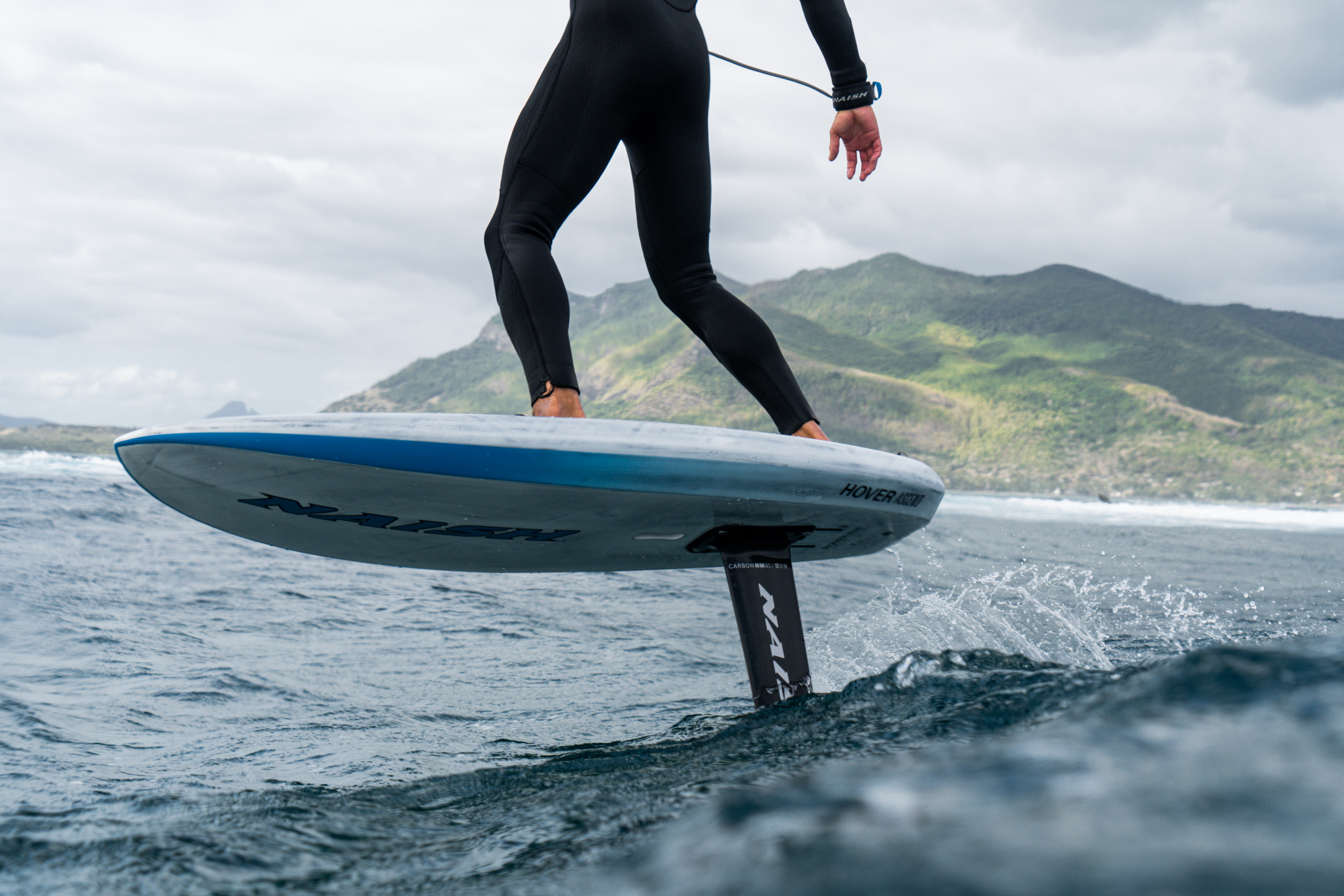
Downwind boards, on the other hand, such as the Naish Hover Downwind crossover foilboard, are longer (over 2 metres), thinner and designed to glide over the water with minimal resistance. They are the easiest to plane and lift on the foil, even in light winds. They are also perfect for SUP Downwind for those who practise in areas where the wind is not always constant.
Downwind boards give you the confidence to get out even on marginal days, while midlength boards offer greater agility in manoeuvres and transitions.
Shape: the form that defines performance
The term “shape” refers to the overall form of the board and influences its behaviour in the water:
- a wide, compact shape offers greater stability and buoyancy, making it perfect for beginners;
- a narrower, more elongated shape, perhaps with a more pronounced rocker, is ideal for those seeking high performance, manoeuvrability and control at high speeds;
- a slightly concave bottom promotes planing and reduces the risk of sinking when starting.
Many modern models combine different types of shapes, creating hybrid boards that can adapt to varying conditions and different riding styles.
A great example is the Naish Hover Wing Ascend Carbon Ultra foilboard, a board with a refined shape, lightweight construction and immediate response underfoot.
Rigid or inflatable wing foil board?
One of the most debated choices concerns the type of construction: rigid or inflatable board? Both options have specific advantages, and the choice depends on your level and logistical needs.
Among all wing foil boards, rigid boards such as the Duotone Sky Style SLS, are generally made of carbon or composites, offering greater control, sensitivity and performance. They are the preferred choice for intermediate and advanced riders, or those who want a more precise feel underfoot.
Inflatable wing foil boards, on the other hand, are perfect for beginners or those who travel frequently. They are lightweight, easy to transport and more resistant to impact. What's more, today's construction quality is so high that it guarantees excellent performance even on “soft” models, such as the RRD Air Beluga Y30 Inflatable wing foilboard, which combines lightness, practicality and excellent rigidity thanks to the lightest and stiffest carbon plate on the market.
Choosing a Wing Foil board based on riding style
Each Wing Foil style requires specific boards, designed to offer the best performance depending on the discipline:
- for those who love freeriding or relaxed cruising, we recommend choosing wide, stable boards, perfect for smooth and safe sailing;
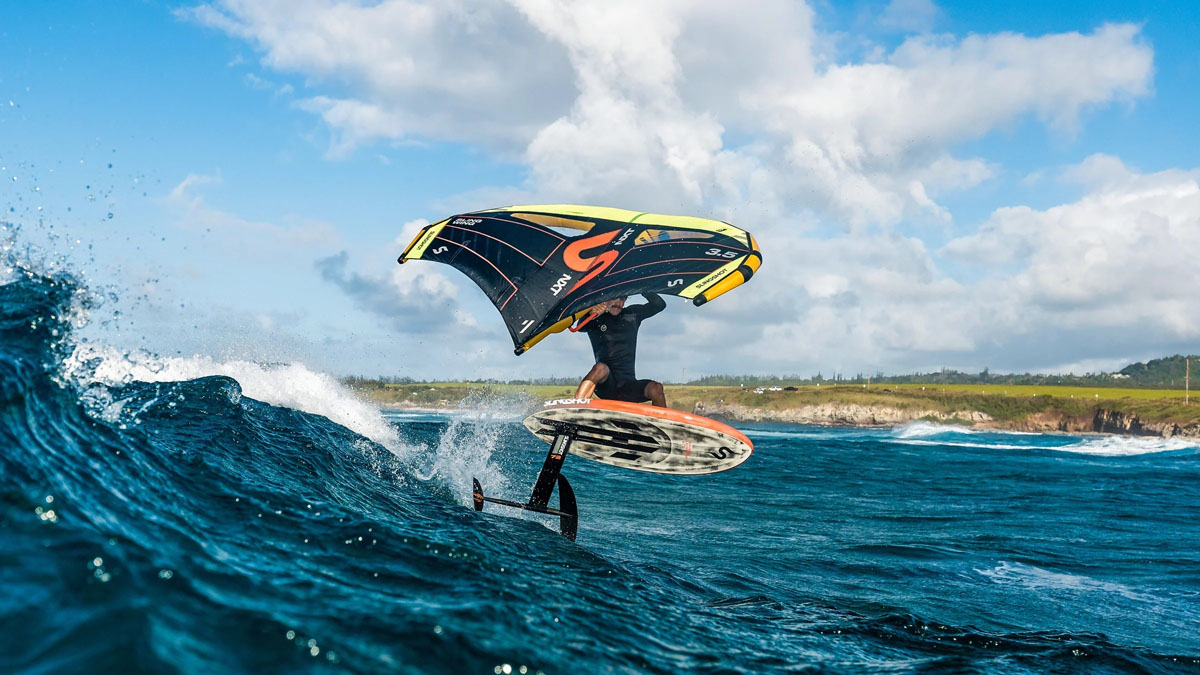
- for those who prefer freestyle and jumps, the choice should fall on short, light shapes equipped with straps for better control in the air;
- for wave riding, i.e. riding the waves, a thin board with a pronounced rocker is best, capable of adapting to the movements of the water.
In this regard, hybrid boards are an excellent compromise for those who want to try out multiple disciplines without having to change boards every time.
Finally, discover our selection of Surf Foil Boards, specifically designed for prone foiling, and Foil Pumping Boards, designed to maximise efficiency in generating speed and lift through the pumping motion of the body, even in the absence of waves or wind.
Choose the board that will get you out on the water more often
The secret to progressing quickly in Wing Foil is to get out on the water as often as possible. For this reason, the right board is one that allows you to have fun right away, without getting discouraged by the initial difficulties. It is better to have a stable and forgiving board that will accompany you through the learning phase, rather than an advanced model that is likely to remain in the garage. When you feel you have full control, you can move on to a smaller, higher-performance board that can keep up with your progress.
If you are undecided between two models or want to understand which volume is really suitable for your weight and level, contact our team of experts at Kiteworldshop.com We will help you choose the perfect board for your next flight over the water!
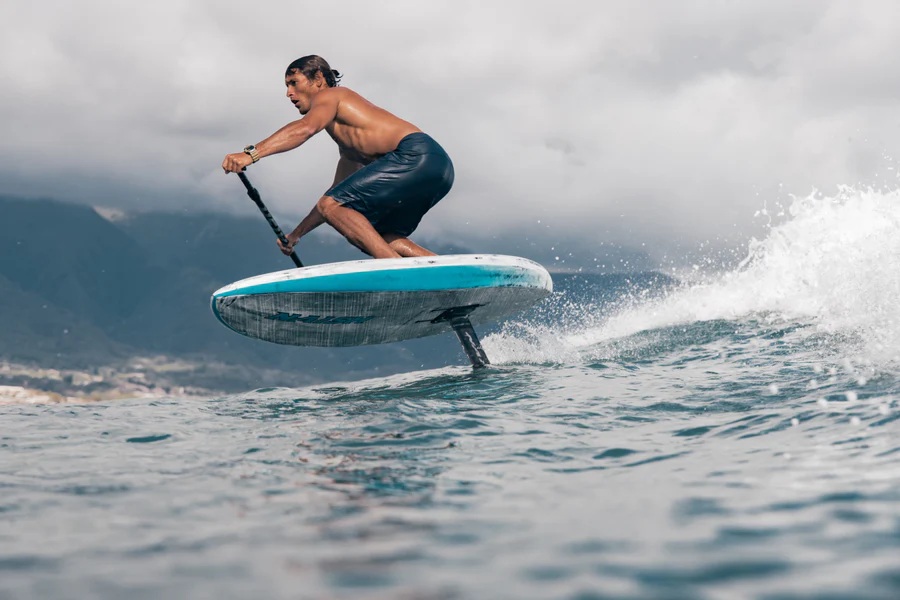
Photo Credit
Photo 1: DUOTONE
Photo 2: DUOTONE
Photo 3: NAISH
Photo 4: NORTH
Photo 5: SLINGSHOT
Photo 6: NAISH